Student Pages

Teacher Pages
Additional Resources

Eunit - PLT Curriculum Pilot
Option 1: Reinforce the activity by sending home copies of the family-friendly Web of Life Activity student page, which invites students to create individual models of a forest food web with their families.
Option 2: Invite students to use Webspiration or another online application to create a food web or food chain for the forest ecosystem, using information they gleaned from the activity. Their models should show the transfer of energy from one organism to another.
Option 3: With construction paper and colored markers, make cutouts of the food web organisms from the activity. Using a clothes hanger and thread to hang cutouts in the proper arrangement, students can construct a mobile that represents their food web. Challenge them to use arrows or other means to show the transfer of energy between the organisms.
Option 4: Challenge students to draw a food chain for their favorite food or meal. For information, you may first read aloud Who Eats What? Food Chains and Food Webs by Patricia Lauber, described in the Additional Resources.
Option 5: Have students compose their own poems about food webs, using as inspiration What’s for Dinner? Quirky, Squirmy Poems from the Animal World by Katherine B. Hauth and David Clark (described in Additional Resources) or another poetry book. Create a “Poet-Tree” using a dead tree limb—held in a can with rocks or plaster of Paris—onto which you clip each student’s poem.
Option 6: Read Pond Circle by Betsy Franco and Stefano Vitale, described in Additional Resources. Invite students to make a model of the pond food chain using paper chain links they glue together. On each link, have the students write one component of the food chain.
See Additional Resources for more ideas to enrich this activity.
Option 1: Assess students’ understanding of key terms used in this activity with the Key Vocabulary: Web of Life student page. Refer to the Key Vocabulary: Web of Life teacher page for the correct responses.
Option 2: Give students a copy of the Design a Food Web student page and ask them to answer the questions provided. You may use the Web of Life Evaluation Rubric teacher page to assess their work.
Option 3: Challenge students to create a mobile that shows the food web connections between different forest organisms.
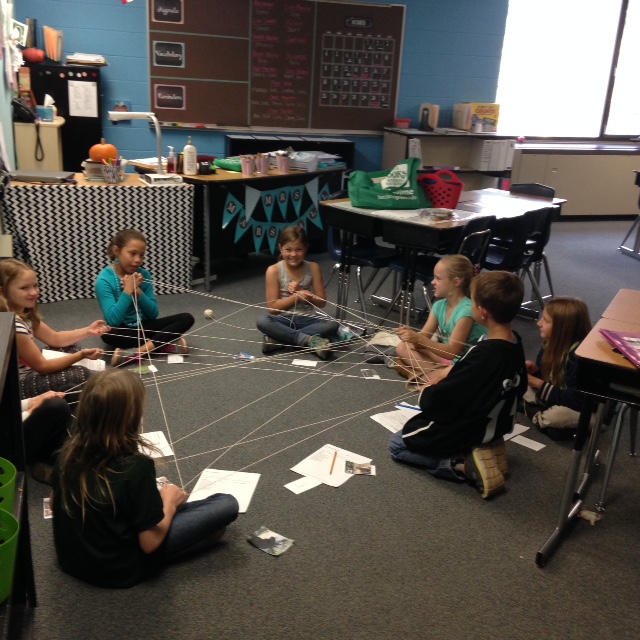
Students are learning about the interactions of different creatures in their modeled food web.
Photo credit: Rose Banzhaf
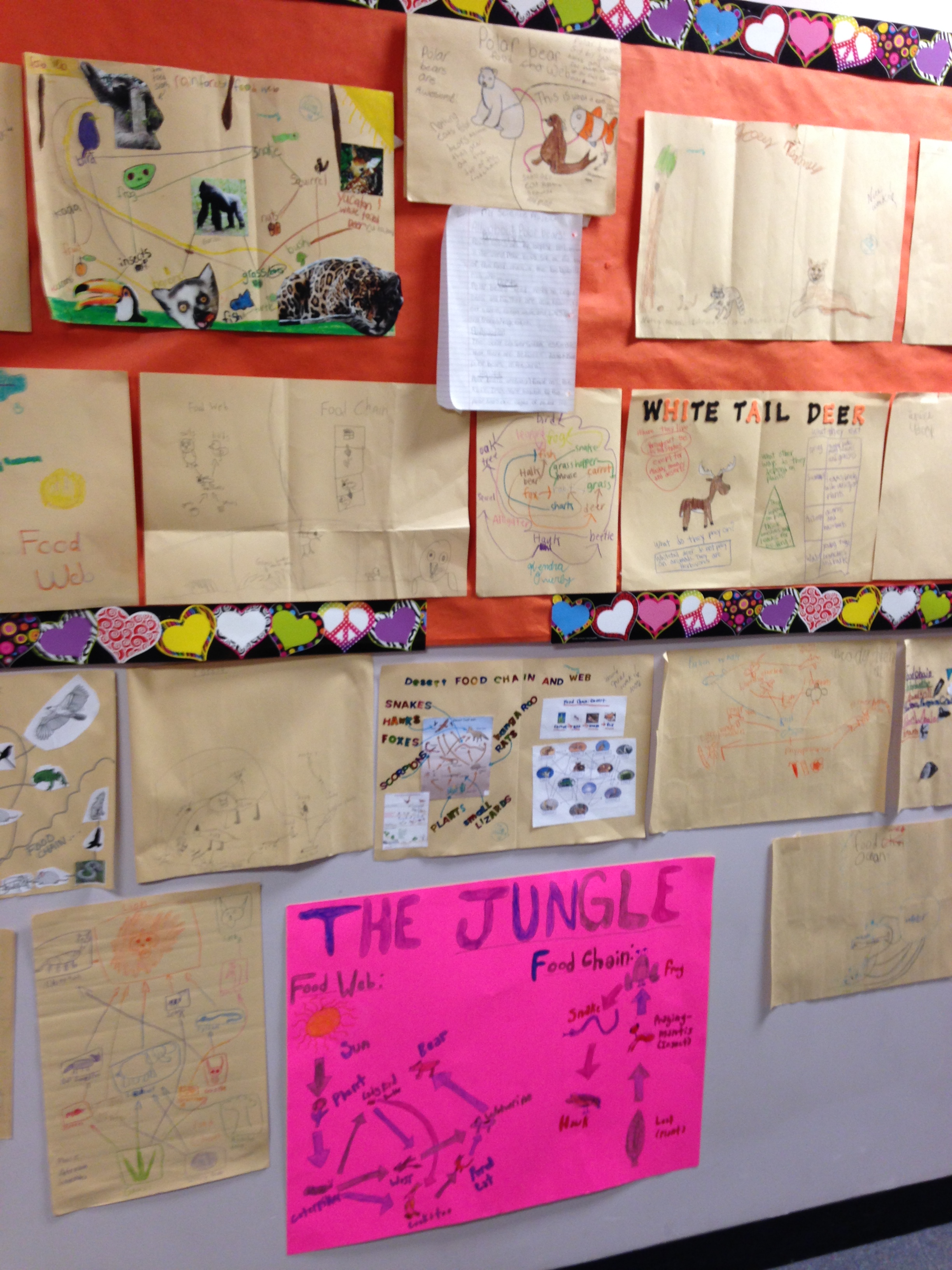
Student drawings depicting their animal and how it interacted with the rest of the food web.
Photo credit: Beth Horning
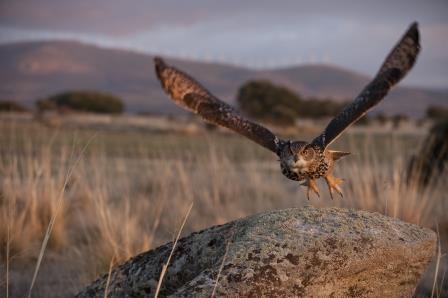
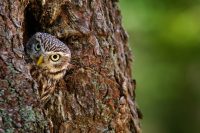
Owl hunting for rabbit
©Shutterstock: Alfredo Maiquez.
You may think of a forest as just a collection of trees, but a forest actually has many different animals and plants that interact with and depend on each other. It is a complex living system, or ecosystem.
Food is one important way that forest plants and animals are connected with each other. Forest plants use sunlight to make food. Through a process called photosynthesis that takes place in their leaves, they convert the sun’s energy to food energy. The plants use this food energy to live and grow.
Animals are not able to make their own food energy and must rely on plants for food. Some animals, called herbivores, eat plants directly. Some animals, called carnivores, eat other animals that eat plants. And some organisms, called decomposers, eat dead plants and animals.
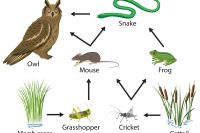
A food chain describes the transfer of energy from one organism to another in an ecosystem. One simple food chain is grass being eaten by a rabbit and then the rabbit being eaten by an owl. We can show this food chain using an equation like this:
sun → grass → rabbit → owl
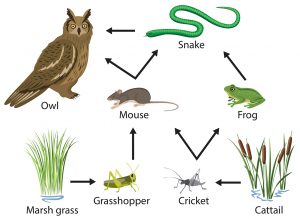
One example of a simple food web that could be found in North America
Notice that this food chain, like all food chains, starts with the sun. The arrows that follow show the food energy being passed from one organism to the next.
In reality, it is rare for an animal to eat only one type of food. A food web shows the many different foods the animals in an ecosystem eat. It gives a clearer picture of the ways food energy is passed through an ecosystem and shows how the plants and animals in an ecosystem are connected.
Food is just one way that plants and animals depend on each other. In addition, animals need plants for shelter and shade. And plants need animals to pollinate flowers, spread seeds, and eat insects.
By conducting research and simulating a food web, students will take a close look at a forest ecosystem and discover ways that plants and animals are connected to each other. While this activity focuses on forests, you can also use it to study other ecosystems, such as oceans, deserts, marshes, or prairies, by substituting the appropriate information.
| Possible Forest Plants | Possible Forest Animals |
|---|---|
| azalea* clover* columbine cottonwood Douglas fir honeysuckle* lichen* maple tree* pine tree* poison ivy shelf fungus violet |
bark beetle barred owl bat* bear beaver box turtle* butterfly* chipmunk* deer earthworm* field mouse* grasshopper* hawk moth* king snake lizard* mosquito* opossum* rabbit* raccoon* red fox red squirrel* skunk* snail* tick* tree frog woodpecker* |
* may also be found in an urban forest
You may use the Key Vocabulary: Web of Life student page to introduce students to the following vocabulary terms or to review or assess their mastery of these terms. Note that the definitions below are geared for students, while the definitions that “pop up” within the activity text online are geared for the teacher.
| Term | Definition |
|---|---|
| Carnivore | An animal that eats other animals. |
| Decomposer | An organism that eats dead material and causes it to break down. |
| Ecosystem | A community of living things interacting with their environment. |
| Food chain | The order in which animals feed on plants and on other animals. |
| Food energy | Energy that organisms get from food in order to live and grow. |
| Food web | All of the connected food chains in an ecosystem. |
| Herbivore | An animal that eats plants. |
| Photosynthesis | The process by which green plants make food from sunlight, water, and carbon dioxide. |
See Standards Connections in the Appendices for a list of standards addressed in this activity.